

Your Professional Air Actuated Valves Supplier
Qinhuangdao Yandakeli Plastic Co., Ltd. is a young and dynamic company.
Jevetec mainly provide electric actuators, pneumatic actuators, ball valve, butterfly valve, gate valve, check valve and other series products and control unit of IOT that exactly suit our customer's needs.


Why Choose us
Global Market Layout
The company's products have successfully penetrated into the markets of numerous countries and regions, establishing a comprehensive sales and service network. We are dedicated to delivering timely and efficient technical support as well as after-sales service to our global clientele, thereby earning extensive trust and acclaim.
Excellent Team
Based on experienced expert team from Hebei Normal University Of Science & Technology .We offers solutions to ensure that your control system are exactly fit for your use.
Product Quality Assurance
We rigorously adhere to international quality management system standards, implementing stringent quality control across all stages from raw material procurement to production and manufacturing. Prior to delivery, all products undergo multiple rigorous testing procedures to guarantee their stability, durability, and optimal performance under diverse operating conditions.
Specification
|
Materials |
|
|
Body |
PVDF |
|
Valve Seat |
PTFE |
|
Seal O-ring |
FPM |
|
End Connections |
|
|
Size |
DN15-1/2” |
|
Connectionoptions |
Slip |
|
Temperature and Pressure |
|
|
Max. Temperature |
135℃ |
|
Max. Pressure |
<1.6Mpa |
|
Pneumatic actuator |
|
|
90°Rotate time |
0.5-3 Secs |
|
Air Supply pressure |
7bar |
Benefits of Air Actuated Valves
Easy Maintenance
Also known as air actuated valves and air piloted pneumatic valves, these devices have fewer moving parts than their solenoid and manual counterparts. The simple, robust design requires less maintenance, allowing efficiency without constant upkeep. These valves have a high shifting force and tight seal, aren’t easily damaged and don’t require frequent replacement.
Cost-Effective
Air actuated valves are smaller and more efficient than solenoid and manually operated valves. They use less compressed air and the durable design demands fewer upgrades and repairs. They provide long-term cost savings, especially because they don’t need excess maintenance. Air piloted valves last several years when properly maintained, so you won’t have to purchase replacements frequently.
Safety
These valves can handle volatile environments where electricity could result in combustion. They can be employed in operations that aren’t safe for manual valves and mounted in remote locations.
Versatility in Applications
Air piloted valves can be easily integrated into automated systems. They’re available in 2-, 3- and 4-way normally opened or closed designs, making them suitable for on-off functions, pressure regulation and directional control. They function as slave and lockout valves to complete simultaneous and interlocking functions.
Reliable in Harsh Conditions
Air actuated valves are designed for hazardous, wet and dirty applications. For example, an air piloted valve would work well in an application where you must transition from contaminated to clean air.
Types of Air Actuated Valves

Pneumatic Ball Valves
These valves feature a ball with a hole through the center, which rotates to control fluid flow. When the hole aligns with the flow path, the pneumatic valve is open, and when it’s perpendicular, the valve is closed. Pneumatic ball valves are known for their tight sealing and are commonly used for on-off control in applications that require a robust and reliable valve.

Pneumatic Butterfly Valves
In these valves, the flow of fluid is controlled by a disc that rotates on a shaft. When the disc is parallel to the flow, the valve is open, and when it’s perpendicular, the valve is closed. Butterfly valves are typically used in large-diameter pipelines and are valued for their low cost and light weight.

Pneumatic Globe Valves
These valves use a movable plug or disc assembly to regulate fluid flow. The plug is attached to a stem which is moved by the pneumatic actuator. Globe valves offer precise flow regulation, making them ideal for applications that have high flow and require accurate flow control.
How Air Actuated Valves Works
Air actuated valves function by using the power of compressed air to open, close, or regulate the flow of a fluid within a pipeline or a process.
The working of these valves is centered around two main components: the valve body and the pneumatic actuator. The valve body is the component that directly interacts with the fluid, while the pneumatic actuator is responsible for moving the control element within the valve body.
The process begins when compressed air is introduced into the pneumatic system or actuator. The air pressure acts on a piston or a diaphragm within the actuator, causing it to move. This movement is then transferred to the control element within the valve body, typically a disc, a ball, or a gate.
In the case of a two-position actuation, the valve is either fully open or fully closed. When compressed air is applied, the valve opens by moving the control element away from the flow path. When the air supply is cut off, a spring within the actuator pushes the piston or diaphragm back to its original position, moving the control element back to block the air flow through path, thereby closing the valve.
In the case of modulating or throttling valves, the amount of air pressure applied to the actuator can be adjusted to position the control element at different levels within the flow path. This allows for precise directional control of the flow rate.
It’s important to note that the force exerted by the compressed air needs to be sufficient to overcome the process fluid pressure and any friction within the valve. This makes the selection of the appropriate actuator and control element crucial to the proper functioning of the valve.
Shipping and Payment Terms
|
Shipping |
We offer various shipping methods, including sea freight, air freight, and express delivery, depending on the order size and destination. |
|
Terms Of Payment |
We usually accept T/T, L/C, Paypal, Credit card, etc. If you prefer other payments terms, please feel free to discuss with us. |
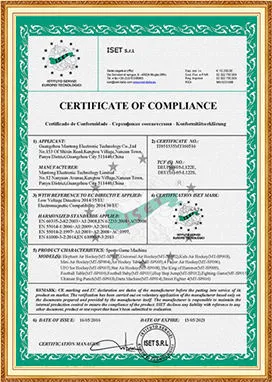
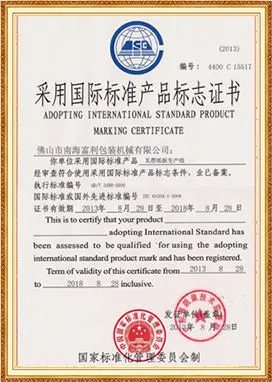
Certificate



FAQ
We're well-known as one of the leading air actuated valves manufacturers in China. If you're going to buy high quality air actuated valves in stock, welcome to get quotation and free sample from our factory. Also, customized service is available.
63mm ball valve, dn50 ball valve, 15mm 3 way valve