

Company Profile
Qinhuangdao Jiewei Technology Co., Ltd. is a young and dynamic company.
Jevetec mainly provide electric actuators, pneumatic actuators, ball valve, butterfly valve, gate valve, check valve and other series products and control unit of IOT that exactly suit our customer's needs.
These valves are widely used in water treatment systems, home automation, HVAC system, smart irrigation system, wildfire emergency sprinkler system, recreational vehicle (RV), trailer home, sprinkler truck, fire truck, air compressor, washing machine, etc., wherever automatic remote fluid control is needed. Based on experienced expert team from Hebei Normal University Of Science & Technology .We offers solutions to ensure that your control system are exactly fit for your use.
Why Choose Us
Quality Control
To be a leader in the automatic valve by providing enhanced services, relationship, and profitability.
Professional Team
To provide quality products & service that exceed the expectations of our esteemed customers.
Customized services
To build long term relationships with our customers and clients and provide exceptional customer services by pursuing business through innovation and advanced technology.
Rich Experience
We believe in treating our customers with respect and faith. We grow through creativity, invention, and innovation. We integrate honesty, integrity and business ethics into all aspects of our business functioning.
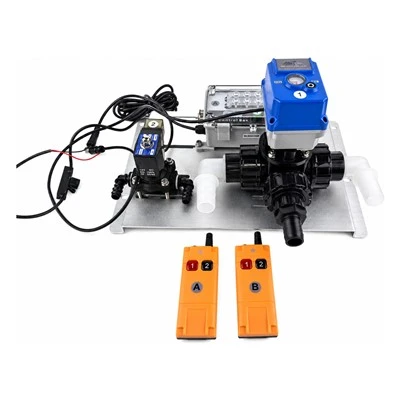



What is Electrically Valves?
The electrically valves has a simple structure and a long service life. It is suitable for almost all media and can greatly reduce the labor intensity of the operator. It is suitable for equipment where it cannot be manually operated or is difficult to approach. It can complete remote operation of the valve, and the height of the equipment is not restricted.
It is mainly composed of two parts. The upper part is an electric actuator and the lower part is a valve. In industrial processes, it is used to control the travel and flow of various fluids, such as water, oil, chemical liquids, etc., based on parameters such as temperature, pressure and flow. electrically valves is a kind of self-control valve that has been widely used in recent years. With its stable reliability and multiple control functions, it can meet the requirements of most common valves that cannot be used. It has become an indispensable control device in the process pipeline.
Benefits of Electrically Valves
Energy Efficiency
Electrically valves are more energy-efficient than other types of actuators. They consume less energy, making them ideal for applications where energy conservation is critical. Also, they can be integrated with energy-saving features such as variable speed drives, which further enhance their energy efficiency.
Precise Control
Electrically valves offer precise control over valve movements, which is crucial in many industrial applications. They can be programmed to open and close valves to a specific position and speed, ensuring that the process runs smoothly and efficiently.
Low Maintenance
Electrically valves require minimal maintenance compared to other types of actuators. They have fewer moving parts, which means that there are fewer components that can wear out over time. Also, they do not require the use of lubricants, which means that there is no risk of contamination in the process.
Easy to Install
Electrically valves are relatively easy to install, which reduces installation time and costs. They can be mounted in any orientation and can be easily integrated with existing control systems.
Types and classifications of electrically valves
● According to different actuators, electrically valves are generally divided into two categories, one is angular stroke, the other is linear stroke, angular stroke electric valve controls 90 degree rotation to achieve the on and off of the valve, and linear stroke realizes the valve plate. The up and down actions are usually used in conjunction with equipment with a higher degree of automation.
● According to the function, it can be divided into switch type and regulation type, intelligent type and explosion-proof type; the switch type is fully open and fully closed, and the regulation type can control any opening degree to achieve the function of adjusting the flow rate!
● According to the valve position, it can be divided into common electric ball valves, electric butterfly valves, electric regulating valves, solenoid valves, electric gate valves, electric shut-off valves, etc., which can be applied to various occasions.
● According to the shape of the valve body, it can be divided into ordinary electric valve and micro electric valve. The working principle of the electric valve: The electric valve is connected by the electric actuator and the valve. After installation and debugging, the valve is driven by the power supply to realize the opening and closing action of the valve, so as to achieve the purpose of switching or adjusting the pipeline medium. The opening degree of the electric valve can be controlled, and the state is open, closed, half-open and half-closed, which can control the flow of the medium in the pipeline, but the solenoid valve cannot meet this requirement.
Application of Electrically Valves


How the food and beverage industry benefits from electrically valves
Electrically valves are invaluable in the food and beverage industry, where hygiene and safety are of utmost importance. electrically valves have precise control over the flow of fluids, offering accurate measures of the amount of fluid used and reducing wastage. Users can program electrically valves to operate automatically, minimizing contamination risks and ensuring food safety by reducing the likelihood of human error. electrically valves find use in a variety of applications that include the processing of raw materials, mixing process, and dispensing of liquids, syrups, and concentrates.
Use of electrically valves in the HVAC industry
Electrically valves play a vital role in the Heating, Ventilation, and Air Conditioning (HVAC) industry. HVAC systems require precise control over the flow of water, air, or refrigerants to maintain temperature and humidity levels in a building or space. Users use electrically valves for automated regulation of flow; they can program them to adjust to changing conditions automatically. electrically valves find frequent use in heating and cooling systems to control the flow of warm or cold water or refrigerant, which ultimately regulates the room temperature. electrically valves regulate the flow of water, manage pressure, and find application in water systems. Hey are, therefore, ideal for optimizing the energy efficiency of HVAC systems and maintaining optimal indoor air quality while minimizing maintenance costs. With the increasing demand for energy-efficient buildings, electrically valves have become a preferred solution for HVAC systems, particularly in commercial and large residential buildings.
Application of electrically valves in water treatment plants
Electric valve are essential in water treatment plants, where efficient and precise management of water flow is necessary. Water treatment plants use advanced systems to purify and process water, and electrically valves can control the flow of water and chemicals used in the process. Users can program them for accurate metering and automatic operation, preventing leaks and overflows of chemicals. Additionally, users can easily integrate electrically valves into control systems and central monitoring consoles to enable efficient, fast, and remote regulation of all valves in the water treatment plant. This technology helps ensure constant water flow, pressure, and consistent quality. electrically valves help optimize water treatment and distribution, process automation, increase efficiency, reduce manual intervention, and improve safety controls. With their capability to handle the demands of large-scale water management systems, electrically valves have become a crucial component in water treatment operations.
Electrically valves in home automation
Electrically valves are an essential component of home automation systems. They allow homeowners to regulate and automate various aspects of their home environment, whether it is to open and close water supply pipes or shut off gas lines in the event of an emergency. With home automation systems, homeowners can remotely control and monitor their home environment using smart devices such as smartphones or tablets. Users can program electrically valves to operate based on preset schedules or environmental stimuli.
Applications of electric valve in swimming pool and spa systems
People commonly use electrically valves in swimming pool and spa systems. The valves regulate water and chemical flow. Valves can control water circulation in pools and spas Valves can direct water for cleaning, filtration, or heating. Installers often install electrically valves with automated control systems. These systems provide precise control of water chemistry and temperature. Programming valves’ features allows for scheduling of valve operation. Valve operation’s scheduled maintenance ensures water and pool chemicals are always in optimal condition. electrically valves are also ideal for water features, fountains, and waterfalls in a pool or spa system. Users can use them to alter the flow rate and height of water features. They create customized visual elements. electrically valves improve pool and spa systems’ efficiency. They reduce maintenance costs.

The electric valve consists of two parts, part electric actuator and part valve. The valve switch power comes from the electric actuator. Because the electric valve is more convenient to use, it can be used with the power supply, compared with the amount of automatic control valves compared with other driving methods. The working principle of electric valve is that the motor to produce linear motion and angular rotation motion under the action of electric signal.
Electric valve mainly has two switch type and regulation type according to the equipped actuator. Switched electric valve is used for opening and closing in the working condition pipeline, and the main function is to cut off or turn on the pipeline medium. The regulating electric valve can accept the signal from the control system, and adjust the opening of the valve to achieve the purpose of regulating the flow and pressure of the pipeline medium.
Components of Electrically Valves
Electric Motor: The actuator is equipped with an electric motor that changes electrical energy into mechanical rotational motion. The motor is typically a brushless DC motor or an AC motor.
Output Shaft: The actuator’s output shaft is connected to the valve stem or actuator mount. As the motor rotates the output shaft, it transfers the motion to the valve, causing it to open or close, depending on the required operation.
Gear Mechanism: The rotational motion of the electric motor is transmitted to a gear mechanism, which converts the high-speed rotation of the motor into a lower-speed, higher-torque output. This gear mechanism provides the necessary power to actuate the valve.
Limit Switches: Electrically valves often incorporate limit switches. These switches are positioned to detect the valve’s fully open and closed positions. When the valve reaches these positions, the limit switches send signals to the actuator control system, indicating the valve’s status.
Control System: The control system of the actuator receives signals from an external control source, such as a Programmable Logic Controller or a control panel. These signals dictate the valve’s desired position or degree of opening/closing. The control system then processes these signals and sends appropriate commands to the electric motor to drive the actuator in the required direction.
Feedback Mechanism: Electrically valves often employ feedback to ensure accurate valve positioning. This mechanism consists of position sensors, such as potentiometers or encoders, that provide continuous feedback on the valve’s actual position. The control system compares this feedback with the desired position and adjusts the motor’s operation accordingly to achieve precise control over the valve position.
How To Operate And Maintain The electrically valves During Operation
The regulating valve is a field instrument, and the ambient temperature is required to be in the range of -25 to 60 °C, and the relative humidity is ≤95%. If it is installed in the open air or in high temperature places, waterproof and cooling measures should be taken. Where there is a vibration source, keep away from the vibration source or increase anti-vibration measures.
The regulating valve should be installed vertically in general, and can be tilted under special circumstances. For example, when the tilt angle is large or the valve itself has too much weight, the valve should be protected by a support.
Generally, the pipeline where the regulating valve is installed should not be too high from the ground or the floor. When the height of the pipeline is greater than 2 m, a platform should be set up as much as possible to facilitate the operation of the handwheel and facilitate maintenance.
Before installing the regulating valve, the pipeline should be cleaned to remove dirt and welding slag. After installation, in order to ensure that impurities do not remain in the valve body, the valve should be cleaned again, that is, all valves should be opened when the medium is introduced to prevent impurities from getting stuck. After using the handwheel mechanism, it should return to the original neutral position.
In order to make the production process continue in the case of failure or maintenance of the regulating valve, the regulating valve should be equipped with a bypass pipeline.
Our Factory
Qinhuangdao Jiewei Technology Co., Ltd. is a young and dynamic company.
Jevetec mainly provide electric actuators, pneumatic actuators, ball valve, butterfly valve, gate valve, check valve and other series products and control unit of IOT that exactly suit our customer's needs.

FAQ
We're well-known as one of the leading electrically valves manufacturers in China. If you're going to buy high quality electrically valves in stock, welcome to get quotation and free sample from our factory. Also, customized service is available.
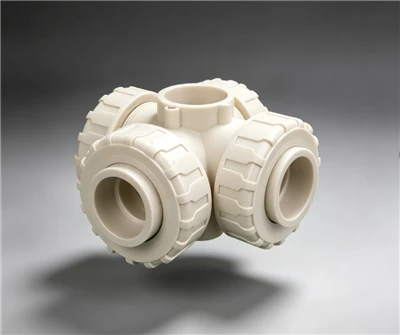
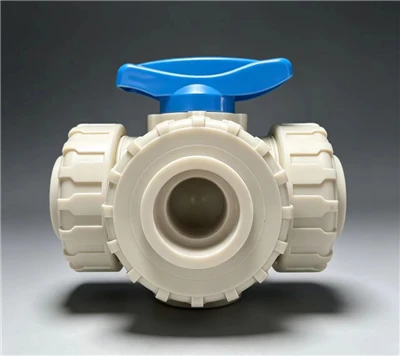
ball valve 3 way L port, Motorized FRPP three way valve, TUYA Wifi Motorized Cpvc V Ball Valve